COBOL Migration
Accelerator
Point it at a mainframe codebase. Out comes a modern cloud application: PostgreSQL database, FastAPI services, React UI, process models, and a full test suite — with every decision auditable.
Proven on AWS CardDemo · 200+ Mainframe Artifacts · March 2026
What the Accelerator Produces
You provide a directory of mainframe source files. The accelerator returns six production-ready artifacts that form the foundation of the replacement system.
No mainframe SME, no weeks of manual discovery, no guessing at business rules. The machine reads the code, maps every relationship, and generates everything a development team needs to start building on day one.
PostgreSQL Database
Complete DDL schema derived from VSAM files, DB2 tables, and copybook record layouts. Includes Alembic migration scripts ready for alembic upgrade head.
Input: VSAM KSDS/ESDS, DB2 DDL, COBOL copybooks
FastAPI REST Services
One endpoint per CICS transaction with typed Pydantic request/response models derived from COMMAREA. HTTP methods inferred from CICS operations (READ→GET, REWRITE→PUT).
Input: CICS CSD files, COMMAREA structures
React Form Components
TypeScript components generated from BMS screen definitions. Field layout, validation rules, 3270 color mapping, and function key handlers all preserved from the original screens.
Input: BMS map files (.bms)
OpenAPI 3.1 Contracts
Machine-readable API specifications from COMMAREA interface definitions. Import directly into Swagger, Postman, or any API gateway — the contract is already written.
Input: COMMAREA / LINKAGE SECTION
BPMN 2.0 Process Models
Visual process diagrams generated from JCL batch flows and CICS transaction chains. Importable into Camunda, jBPM, or any BPMN-compatible engine for orchestration.
Input: JCL job streams, CICS XCTL/LINK chains
pytest-bdd Test Suites
Executable BDD test scenarios extracted from COBOL business rules (EVALUATE statements, 88-level conditions). Teams get a regression test baseline on day one.
Input: PROCEDURE DIVISION logic
How It Works (30-Second Version)
1. Drop In Source
Point at a directory of COBOL, JCL, BMS, DDL, CSD files
2. Auto-Parse
7 parsers extract every program, data structure, transaction, and dependency
3. Build Knowledge Graph
Neo4j maps all relationships: who calls what, who reads what, who depends on what
4. Generate Everything
Database, APIs, UI, contracts, processes, tests — all from one command
The Bottom Line
Traditional mainframe discovery takes 8–12 weeks with expensive SMEs and produces Word documents. This accelerator produces running code, deployable schemas, and executable tests in hours — and the knowledge graph it builds becomes a permanent asset the customer keeps.
The Business Problem
Mainframe migrations fail because teams cannot understand what the system does before they change it.
Operationally Opaque
COBOL programs encode decades of business logic in formats no modern tool can read. Knowledge lives in tribal memory, not documentation.
No Dependency Map
Programs CALL other programs, COPY copybooks, EXEC CICS, and access VSAM files. No single artifact reveals the full dependency web.
No Interface Catalog
COMMAREA and LINKAGE SECTION structures define inter-program contracts but are buried in source code with no API registry equivalent.
Weeks of Manual Discovery
Traditional discovery requires mainframe SMEs to manually trace call chains, map data flows, and document business rules. Slow and error-prone.
Architecture Context
Mainframe Source
Evidence Parsers
Neo4j
Schemas, APIs, UI
What Was Built (Business View)
Complete Automated Discovery
Every COBOL artifact type parsed and cataloged: source, copybooks, JCL, BMS maps, DB2 schemas, CICS resources, IMS definitions, and scheduler jobs.
4-Phase Ingestion Pipeline
Dependency-ordered ingestion: Foundations → Programs → Orchestration → Scheduling. Graph completeness validation with 8 automated checks.
Full Code Generation
PostgreSQL DDL + Alembic migrations from VSAM/DB2, OpenAPI 3.1 from COMMAREA, FastAPI stubs from CICS transactions, React forms from BMS maps.
BPMN + Test Generation
BPMN 2.0 process models from JCL batch flows and CICS transaction chains. pytest-bdd feature files auto-generated from EVALUATE/88-level business rules.
End-to-End Flow
Mainframe Source
COBOL, JCL, BMS, DDL, CSD, DBD, PSB, CA-7
Evidence Parsers
7 new parsers, 16 existing
Knowledge Graph
Ontology + relationships
Migration Engine
Schema, arch, codegen
Target Architecture
PostgreSQL, FastAPI, React
Outcomes & Evidence
Evidence-First Methodology
CDD Compliance
Evidence collected at every phase of the SDLC. Every parser, every test, every design decision has a traceable audit trail from requirement to deployment.
Real-World Validation
All 352 tests run against real AWS CardDemo files, not synthetic test data. Parser outputs verified against known mainframe program structures and data layouts.
Complete Audit Trail
From ADO work item to GitHub PR to deployed parser, every artifact is linked. Compliance managers can trace any output back to its originating requirement.
Delivery Status (90-Day Plan)
Full CardDemo Ingestion
4-phase ingestion pipeline built and tested. Graph completeness validation with 8 automated checks. All 200+ artifact types covered.
- 4-phase ingestion orchestrator (CLI:
kmflow-migrate ingest) - Graph validator with pass/fail checks (CLI:
kmflow-migrate validate) - Cross-program CALL chain resolution
- VSAM/DB2 access pattern mapping
Blueprint + Code Generation
Architecture recommender, schema deriver, and full code generation pipeline operational. BPMN and test generation from business rules.
- Service boundary recommendations (CLI:
kmflow-migrate blueprint) - BPMN 2.0 from JCL/CICS (CLI:
kmflow-migrate bpmn) - PostgreSQL DDL + Alembic (CLI:
kmflow-migrate schema) - OpenAPI + FastAPI + React (CLI:
kmflow-migrate codegen) - pytest-bdd from business rules (CLI:
kmflow-migrate testgen)
Production Pilot
End-to-end pilot runner executes all 8 pipeline stages. Demo data generator enables offline customer demos without live Neo4j.
- PilotRunner: 8-stage end-to-end pipeline (CLI:
kmflow-migrate pilot) - DemoDataGenerator: offline demos (CLI:
kmflow-migrate demo) - Consolidated pilot report with per-stage pass/fail + timing
- Demo data passes 100% graph validation
Strategic Value
Platform Asset
7 parsers + 252 domain terms are reusable for every COBOL customer. Built once, deployed to every future mainframe engagement. The investment compounds.
Amortized cost per engagement drops with each new customer onboarded.
Competitive Moat
The knowledge graph is permanent institutional memory. Competitors deliver a migration. Blaze delivers a migration plus an auditable knowledge base that persists beyond the project.
Knowledge graph becomes a living asset the customer keeps forever.
Accelerated Economics
Next engagement starts with 80% of discovery pre-built. Only customer-specific artifacts need parsing. Time-to-value drops from months to weeks.
Sprint 1 for customer N+1 delivers what took 3 sprints for customer 1.
Technical Deep Dive
Parser architecture, knowledge graph ontology, data flow pipelines, and migration module internals.
Parser Architecture
KMFlow's parser factory was extended with 7 new COBOL-specific parsers that plug into the existing 16-parser framework.
KMFlow Parser Factory
register() / create() / parse()
Existing Parsers (16)
New COBOL Parsers (7)
Parser Detail Cards
CobolSourceParser
94% coverage
Db2SchemaParser
98% coverage
CicsResourceParser
95% coverage
JclParser
97% coverage
BmsMapParser
96% coverage
ImsDefinitionParser
97% coverage
SchedulerParser
97% coverage
Full Coverage Table
| Parser | Extensions | Fragment Types | Coverage |
|---|---|---|---|
CobolSourceParser |
.cbl .cob .cpy .asm |
PROCESS, ENTITY, TEXT, REL, TABLE | 94% |
Db2SchemaParser |
.ddl .dcl .ctl |
ENTITY, REL, TABLE | 98% |
CicsResourceParser |
.csd |
PROCESS, ENTITY, REL | 95% |
JclParser |
.jcl .prc |
PROCESS, ENTITY, REL, TEXT | 97% |
BmsMapParser |
.bms |
PROCESS, TABLE, ENTITY, TEXT | 96% |
ImsDefinitionParser |
.dbd .psb |
ENTITY, REL | 97% |
SchedulerParser |
.ca7 .controlm |
PROCESS, REL, TABLE | 97% |
Knowledge Graph & Ontology
The knowledge graph captures all mainframe artifacts and their relationships in a queryable Neo4j graph. Six node types form the ontology core.
Process
COBOL programs, batch jobs, CICS transactions. Every executable unit in the mainframe ecosystem.
- COBOL programs (.cbl, .cob)
- JCL job steps
- CICS transaction IDs
DataObject
VSAM files, DB2 tables, IMS segments. Every persistent data store the mainframe reads or writes.
- VSAM KSDS/RRDS/ESDS files
- DB2 tables and views
- IMS database segments
InterfaceContract NEW
COMMAREA and LINKAGE SECTION structures that define inter-program contracts. The missing API catalog.
- COMMAREA field layouts
- LINKAGE SECTION definitions
- Parameter passing conventions
Activity
CICS commands, SQL operations, IMS DL/I calls. Every action a program performs against an external resource.
- EXEC CICS SEND/RECEIVE/READ/WRITE
- EXEC SQL SELECT/INSERT/UPDATE
- CBLTDLI calls (IMS)
BusinessRule
EVALUATE blocks, 88-level conditions, decision tables. The encoded business logic that governs program behavior.
- EVALUATE WHEN decision trees
- 88-level condition names
- PERFORM UNTIL iteration rules
4-Phase Ingestion Pipeline
Phase 1: Foundations
Copybooks, DDL, DBD, BMS
Phase 2: Programs
COBOL, DCLGEN, PSB
Phase 3: Orchestration
JCL, CSD, ASM
Phase 4: Scheduling
CA-7, Control-M
Data Flow Pipeline
Tracing a single COBOL program through the entire pipeline, from source to migration output.
Migration Module
Schema Derivation
Type mapping from mainframe to PostgreSQL with full fidelity.
Architecture Recommender
Pattern mapping from mainframe constructs to cloud-native equivalents.
Codegen Orchestrator
Multi-output code generation from knowledge graph queries.
- OpenAPI 3.1 specs from interface contracts
- Alembic migration scripts from schema derivation
- FastAPI route stubs from CICS transactions API
- React form components from BMS maps API
- pytest-bdd feature files from business rules
- AsyncIO workers from JCL batch flows
API = REST endpoint at /api/v1/codegen/ — accepts JSON, returns generated source (AB#152, AB#153)
Code Generation REST API
Two authenticated endpoints transform mainframe artifacts into modern code via POST /api/v1/codegen/.
CICS → FastAPI AB#152
POST /api/v1/codegen/cics-to-fastapi
| Input | Output |
|---|---|
| CICS transaction ID & program | REST route path + HTTP method |
| COMMAREA request fields | Pydantic request model |
| COMMAREA response fields | Pydantic response model |
| CICS operations (READ, REWRITE…) | GET / POST / PUT / DELETE |
BMS → React AB#153
POST /api/v1/codegen/bms-to-react
| Input | Output |
|---|---|
| BMS map name & title | React functional component (TSX) |
| Field definitions (row, col, length) | Form grid with positioned fields |
| Field attributes (color, highlight) | CSS styles (3270 color mapping) |
| Validation rules (required, pattern) | HTML5 input validation |
| Function keys (PF3, PF5, ENTER) | Button handlers (exit, clear, submit) |
Test Coverage: 72 Tests, 100% Line Coverage
CicsFastapiGenerator (37 tests)
- PIC clause → Python type mapping (7 cases)
- JSON fixture parsing (5 cases)
- HTTP method inference (5 cases)
- Field name conversion (3 cases)
- Route path generation (2 cases)
- Pydantic model generation (5 cases)
- Full router generation (10 cases incl.
compile()verification)
BmsReactGenerator (35 tests)
- 3270 color → CSS mapping (5 cases)
- JSON fixture parsing (5 cases)
- Component naming (2 cases)
- Field prop name conversion (3 cases)
- Field rendering: input vs output (6 cases)
- Function key rendering (2 cases)
- Full component generation (12 cases incl. barrel index)
3270 → React: Before & After
Each CICS transaction maps to an authenticated terminal screen rendered here alongside its generated React component. Field colors, validation rules, and function key bindings are all preserved.
3 screens from the CUSTSET mapset covering the core banking operations: inquiry, update, and fund transfer. The left panel shows the IBM 3270 terminal as mainframe operators see it; the right panel shows the TypeScript/React form generated by BmsReactGenerator.
CUSTSET.bms • Map: CUSTINQM • 24×80Customer Inquiry
CustinqmForm.tsxBmsReactGenerator.generate_component()bms_maps.json • Map: CUSTupdm • 24×80Customer Update
CustupdmForm.tsxBmsReactGenerator.generate_component()cics_transactions.json • Inferred from COMMAREA • Program: FUNDXFRFund Transfer
FundxfrForm.tsxConfirmation
BmsReactGenerator.generate_component()CICS ACID Guarantees — Preserved in Modern Stack
CICS is renowned for rock-solid ACID transaction processing. The modernized architecture maintains every guarantee through PostgreSQL, FastAPI middleware, and the Saga pattern for distributed operations.
Each ACID property maps to a specific modern equivalent. No transactional semantics are lost — they are strengthened with explicit typing, automated validation, and observable monitoring.
Atomicity
All-or-nothing execution. If any step fails, the entire transaction rolls back.
Modern: async with db.begin() — SQLAlchemy context manager guarantees COMMIT on success, ROLLBACK on exception
Consistency
Data always moves from one valid state to another. Constraints are never violated.
Modern: Pydantic validates every request before the DB transaction opens — invalid data never reaches the database
Isolation
Concurrent transactions cannot interfere. Each sees a consistent snapshot.
Modern: PostgreSQL SERIALIZABLE for critical paths; FOR UPDATE row locks replace CICS ENQ/DEQ with finer granularity
Durability
Once committed, data survives crashes, power failures, and hardware faults.
Modern: synchronous_commit = on — WAL flushed to disk before commit returns. Streaming replication to standby for HA
Fund Transfer (XFRC): ACID in Action
The most demanding transaction — debiting one account and crediting another — demonstrates all four ACID properties working together.
CICS / COBOL
EXEC CICS READ FILE('ACCTFILE')
     INTO(FROM-ACCT-REC)
     RIDFLD(FROM-ACCT)
     UPDATE              * row lock (Isolation)
END-EXEC

SUBTRACT XFER-AMT FROM ACCT-BAL  * debit

EXEC CICS REWRITE FILE('ACCTFILE')
     FROM(FROM-ACCT-REC) * write back
END-EXEC

* ... same for TO-ACCT (credit) ...

EXEC CICS SYNCPOINT     * Atomicity + Durability
END-EXEC
FastAPI / PostgreSQL
async def transfer_funds(req: TransferRequest):
  async with db.begin():  # Atomicity
    from_acct = await accounts.get(
      req.from_id,
      lock=True     # SELECT FOR UPDATE (Isolation)
    )
    to_acct = await accounts.get(
      req.to_id,
      lock=True     # row-level lock
    )

    from_acct.balance -= req.amount  # debit
    to_acct.balance += req.amount    # credit

    await transfer_log.create(
      conf=generate_conf_num()       # audit trail
    )
  # COMMIT on exit (Durability: WAL flush)
  # ROLLBACK on exception (Atomicity)
Distributed Scenario: Saga Pattern
When the transfer spans multiple services (e.g., cross-bank), a Saga with compensating transactions replaces the single-phase SYNCPOINT.
Business Process Models (BPMN 2.0)
Business logic extracted from COBOL source and represented as standards-compliant BPMN 2.0 process models. Each model traces to specific COBOL paragraphs and line numbers.
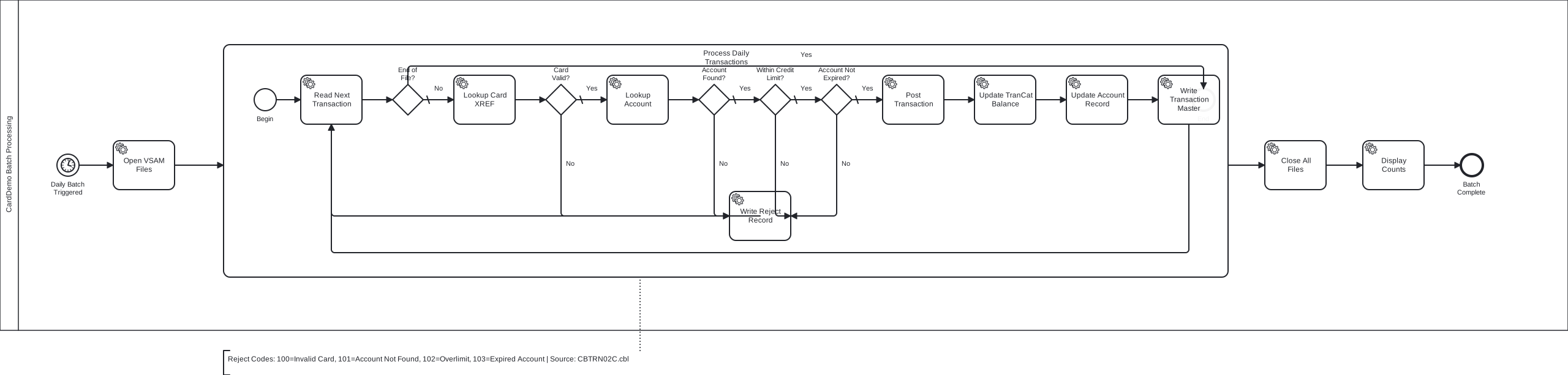
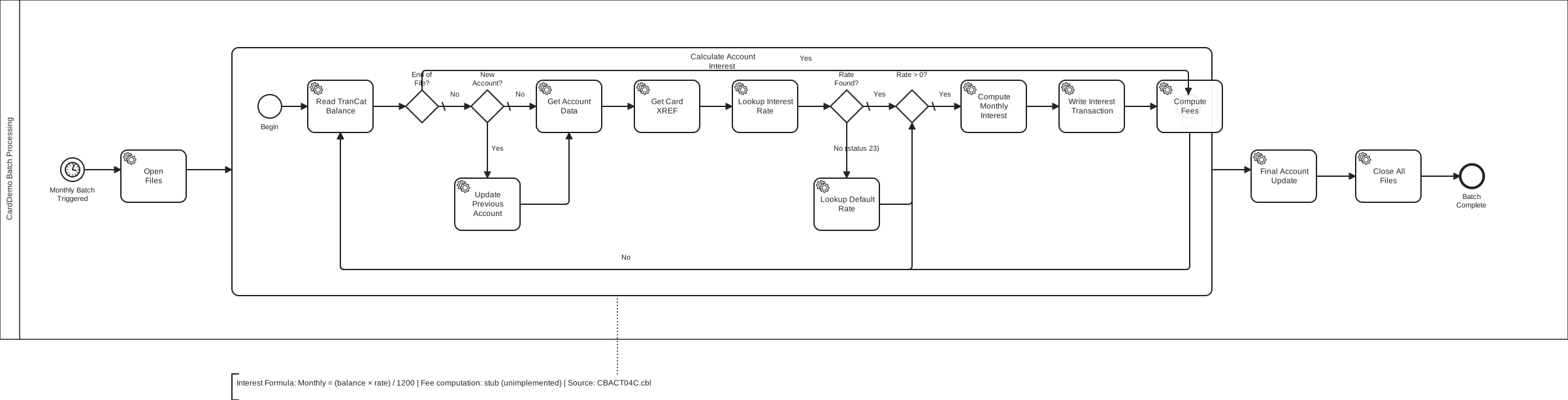
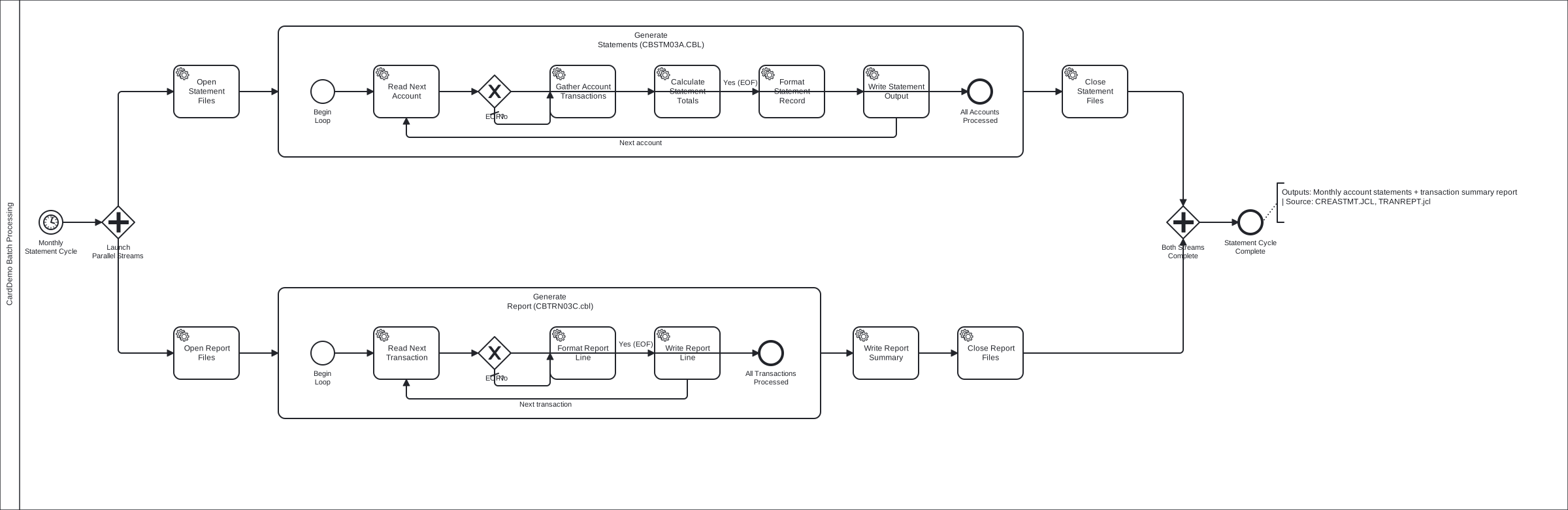
8 process models cover the full CardDemo application: 3 batch processes (daily posting, interest calculation, statement generation) and 5 CICS online flows (signon, account management, card operations, transaction inquiry, transaction add). All models are importable into Camunda, jBPM, or any BPMN 2.0 engine.
Batch Processes
Timer-triggered batch jobs extracted from JCL job streams and COBOL batch programs.
Daily Transaction Posting CBTRN02C.cbl POSTTRAN.jcl
Validates and posts daily credit card transactions. Each transaction passes through 4 validation gates (card XREF lookup, account lookup, credit limit check, expiry check) before posting to the transaction master. Failed transactions are written to a reject file with codes 100–103.
Interest Calculation CBACT04C.cbl INTCALC.jcl
Monthly interest computation across all accounts. Reads transaction category balances, looks up interest rates from the DISCGRP file by account group/transaction type/category, and computes monthly interest using the formula: (TRAN-CAT-BAL × DIS-INT-RATE) / 1200. Fee computation (paragraph 1400) is identified as a stub — a gap for the modernization effort.
Statement & Report Generation CBSTM03A.CBL CBTRN03C.cbl
Parallel batch streams: one generates monthly account statements (account-by-account with transaction gathering and balance calculation), the other produces transaction summary reports. Both streams synchronize before completing the cycle.
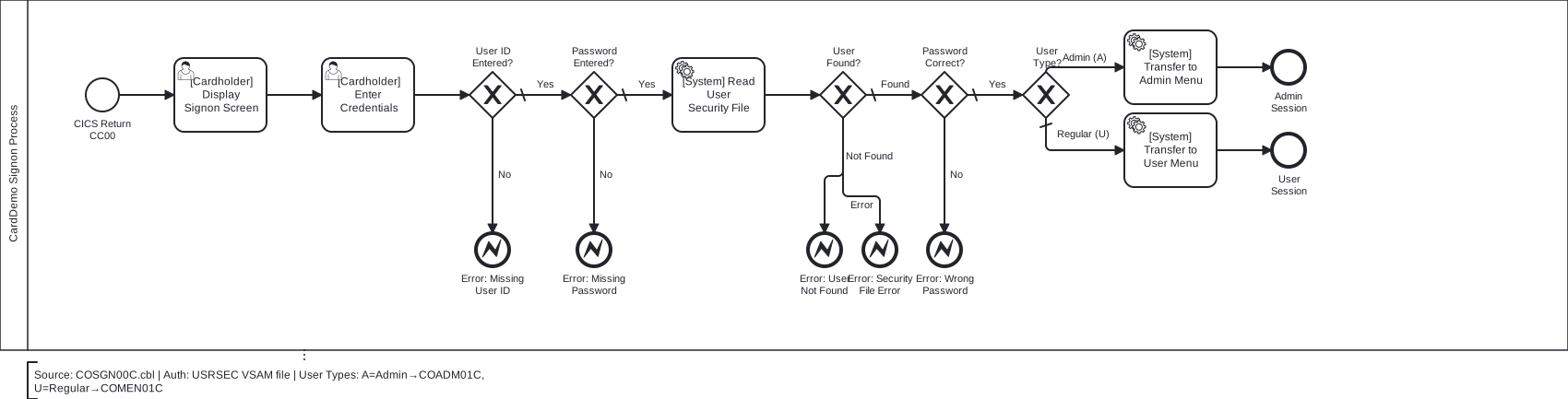
CICS Online Processes
User-facing CICS transaction flows extracted from online COBOL programs.
User Authentication & Menu Routing COSGN00C.cbl
CICS signon flow: credential entry, USRSEC file validation, password verification, and routing to Admin menu (COADM01C) or User menu (COMEN01C) based on SEC-USR-TYPE. Error paths terminate at dedicated end events rather than looping.
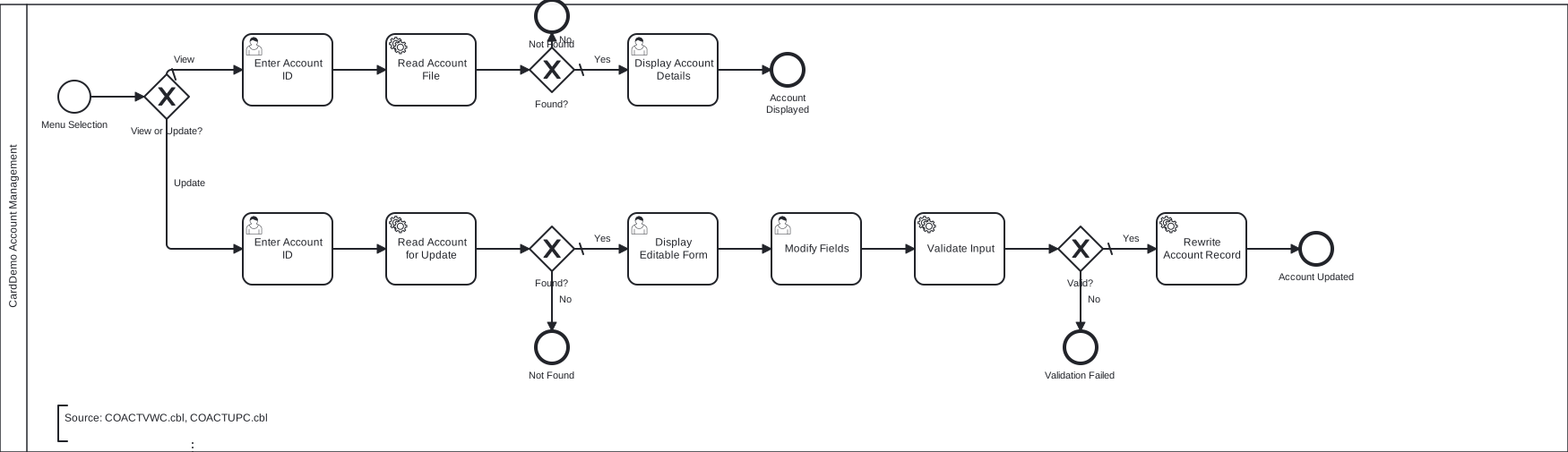
Account View & Update COACTVWC/COACTUPC
Menu options 1–2: account inquiry (read-only) and account update with 88-level field validation for phone, SSN, dates, and address fields.
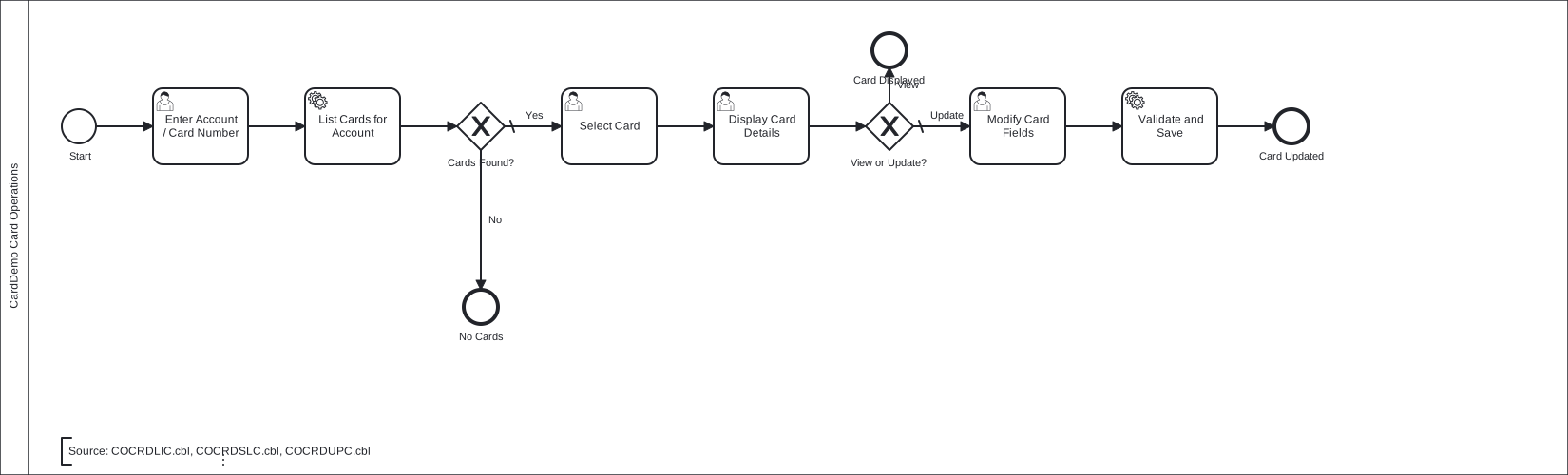
Card Operations COCRDxxx.cbl
Menu options 3–5: credit card list, view, and update. Linear flow from card selection through detail display to optional modification.
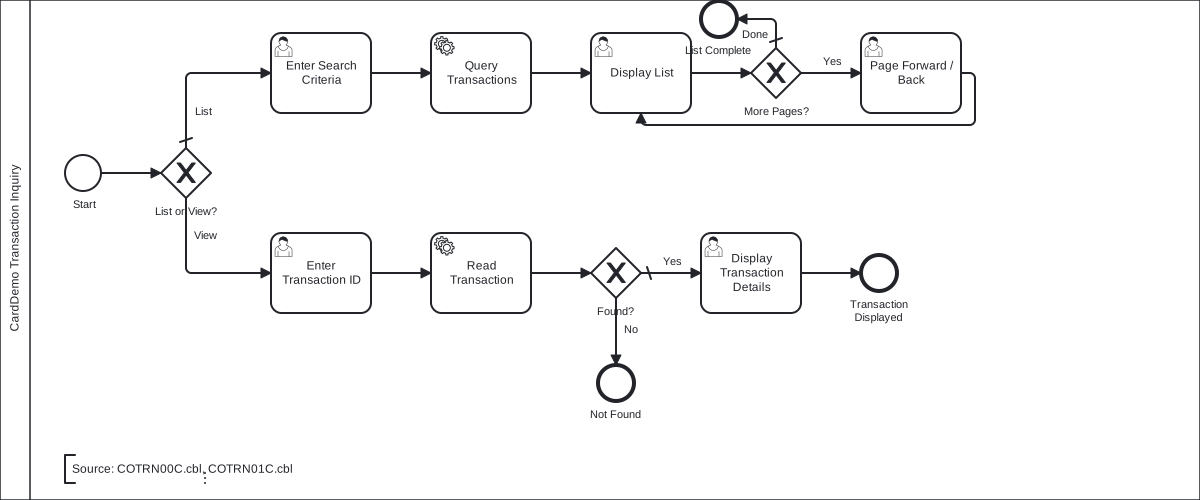
Transaction Inquiry COTRN00C/01C
Menu options 6–7: paginated transaction list with search and individual transaction detail view.
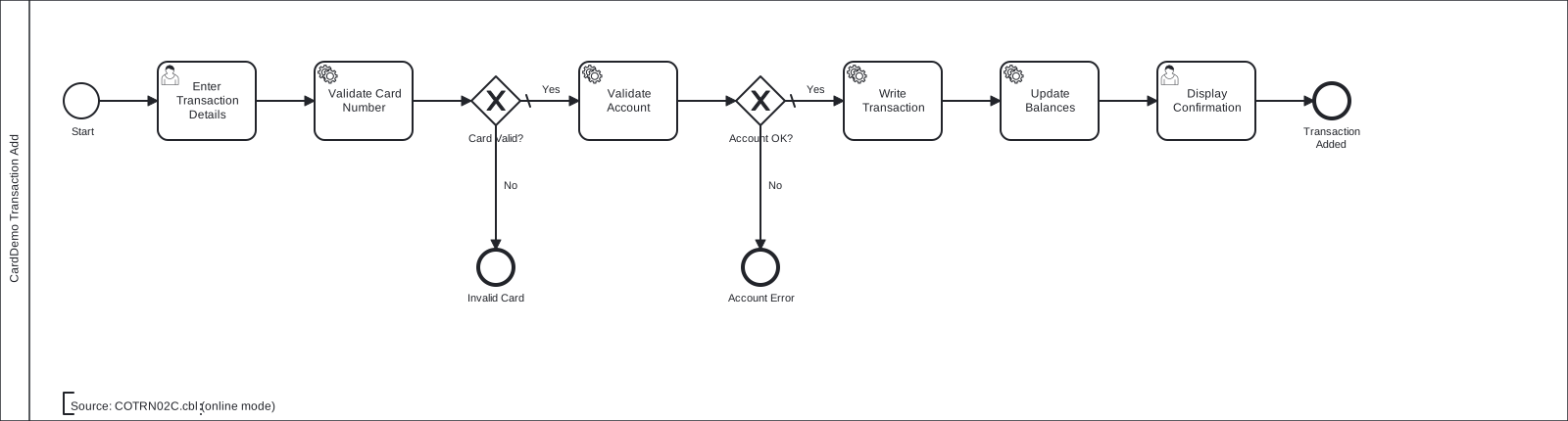
Transaction Add COTRN02C
Menu option 8: add new transaction with card number validation (XREFFILE lookup) and account validation (credit limit, expiry check) before posting.
Decision Models (DMN 1.3)
Business rules extracted from COBOL EVALUATE statements, 88-level conditions, and VSAM lookup tables, represented as DMN decision tables importable into any decision engine.
4 decision tables cover transaction validation, interest rate determination, account status evaluation, and user access control. Each table preserves the original COBOL evaluation order and reject codes.
Transaction Validation Hit: FIRST
Encodes reject codes 100–103 from CBTRN02C.cbl paragraph 1500-VALIDATE-TRAN. Sequential evaluation mirrors the COBOL IF chain.
| Card Found | Account Found | Within Limit | Not Expired | Result | Code |
|---|---|---|---|---|---|
| false | - | - | - | REJECT | 100 |
| true | false | - | - | REJECT | 101 |
| true | true | false | - | REJECT | 102 |
| true | true | true | false | REJECT | 103 |
| true | true | true | true | APPROVE | 0 |
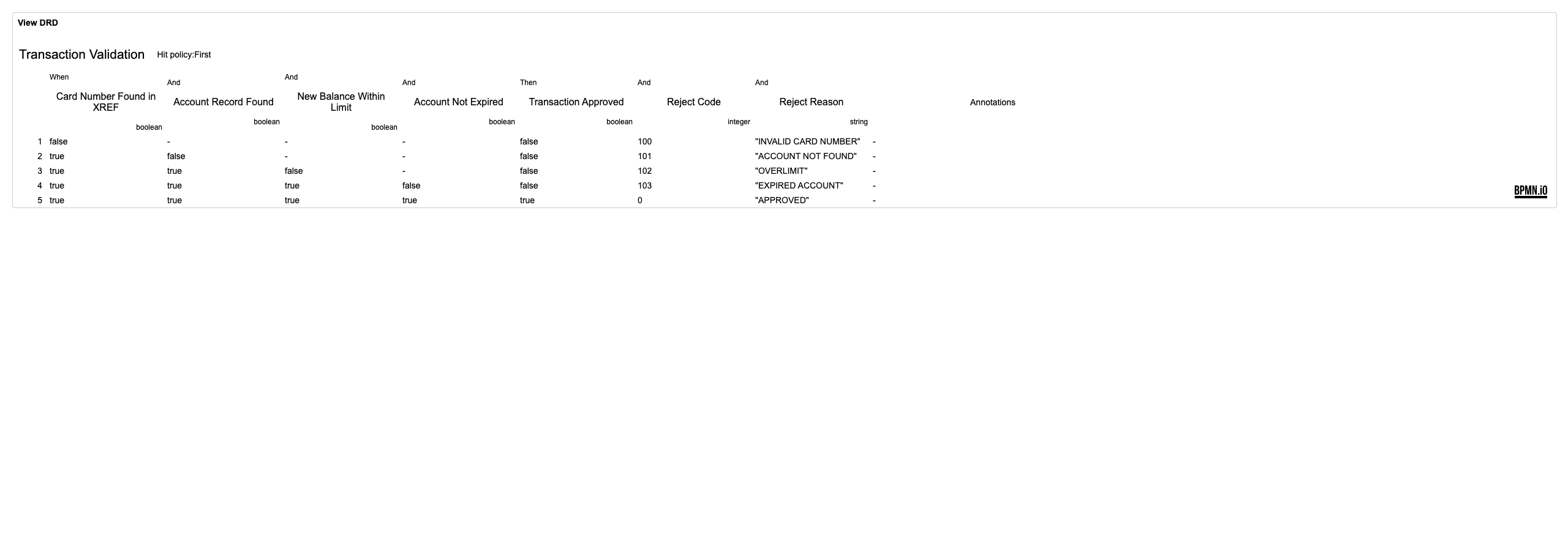
Click to view full DMN decision table
Interest Rate Lookup Hit: UNIQUE
DISCGRP VSAM file lookup by account group, transaction type, and category. Includes DEFAULT fallback per paragraph 1200-A-GET-DEFAULT-INT-RATE.
| Group | Type | Cat | Rate |
|---|---|---|---|
| DEFAULT | 01 | 5 | 18.00% |
| GOLD | 01 | 5 | 15.50% |
| PLATINUM | 01 | 5 | 12.00% |
| DEFAULT | 02 | 1 | 24.00% |
| DEFAULT | 01 | 1 | 0% |
Formula: Monthly = (balance × rate) / 1200
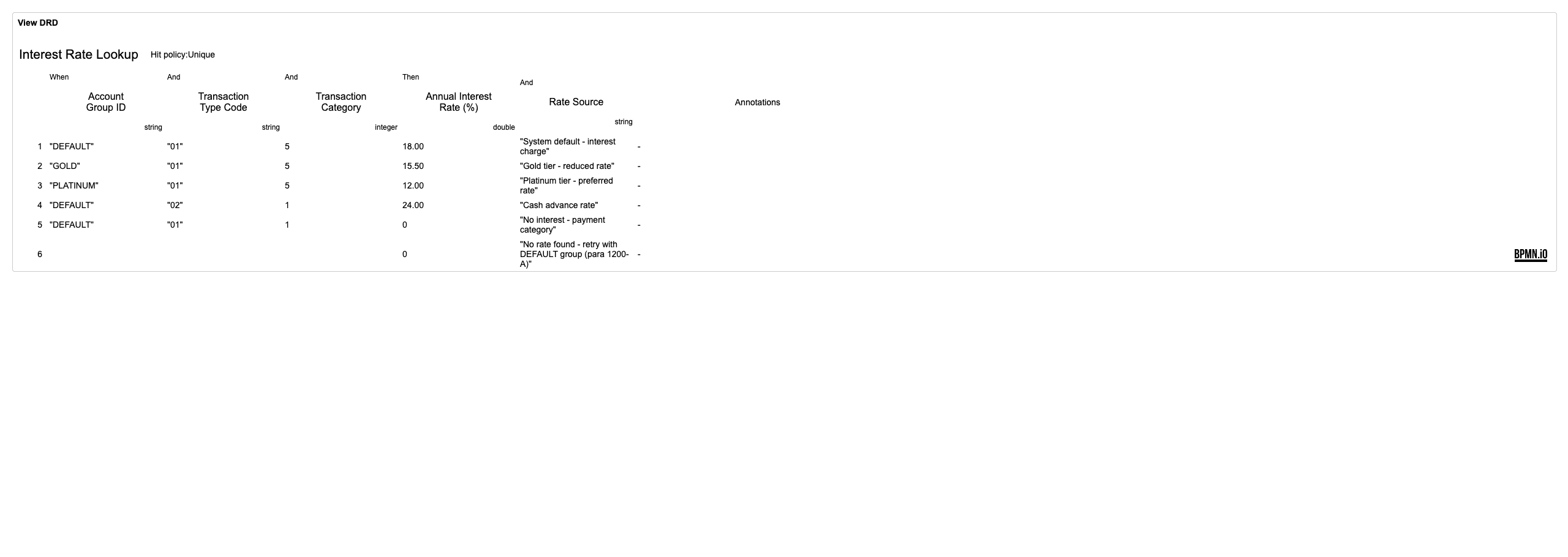
Click to view full DMN decision table
Account Status Hit: FIRST
Determines account eligibility from CVACT01Y.cpy fields: active status, expiration, credit limit, and balance. Pre-computed booleans for date and limit comparisons.
| Active | Expired | Over Limit | Status | Allowed |
|---|---|---|---|---|
| N | - | - | Inactive | No |
| Y | Yes | - | Expired | No |
| Y | No | Yes | Overlimit | Restricted |
| Y | No | No | Active | Yes |
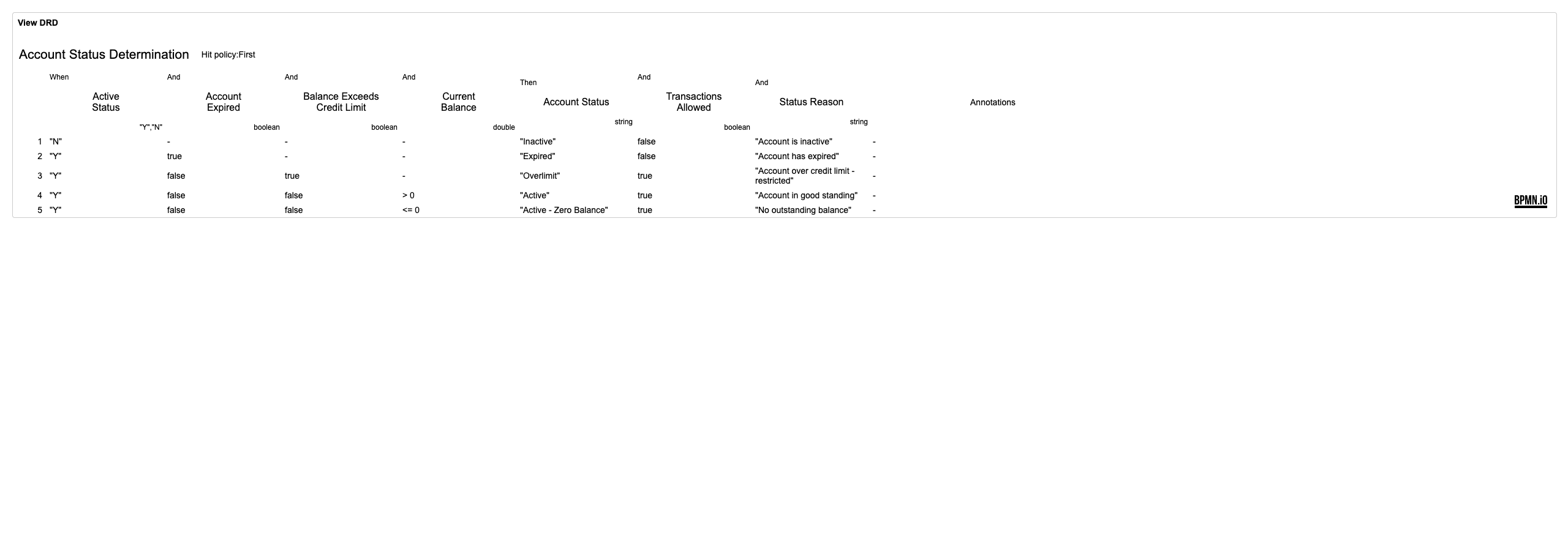
Click to view full DMN decision table
User Access Control Hit: COLLECT
Menu option mapping from COMEN02Y.cpy (11 user options) and COADM02Y.cpy (6 admin options). Returns all permitted programs for the given user type.
Regular User (U) — 11 options
Account View • Account Update • Card List • Card View • Card Update • Txn List • Txn View • Txn Add • Reports • Bill Pay • Pending Auth
Admin (A) — 6 options
User List • User Add • User Update • User Delete • Txn Type List (Db2) • Txn Type Maint (Db2)
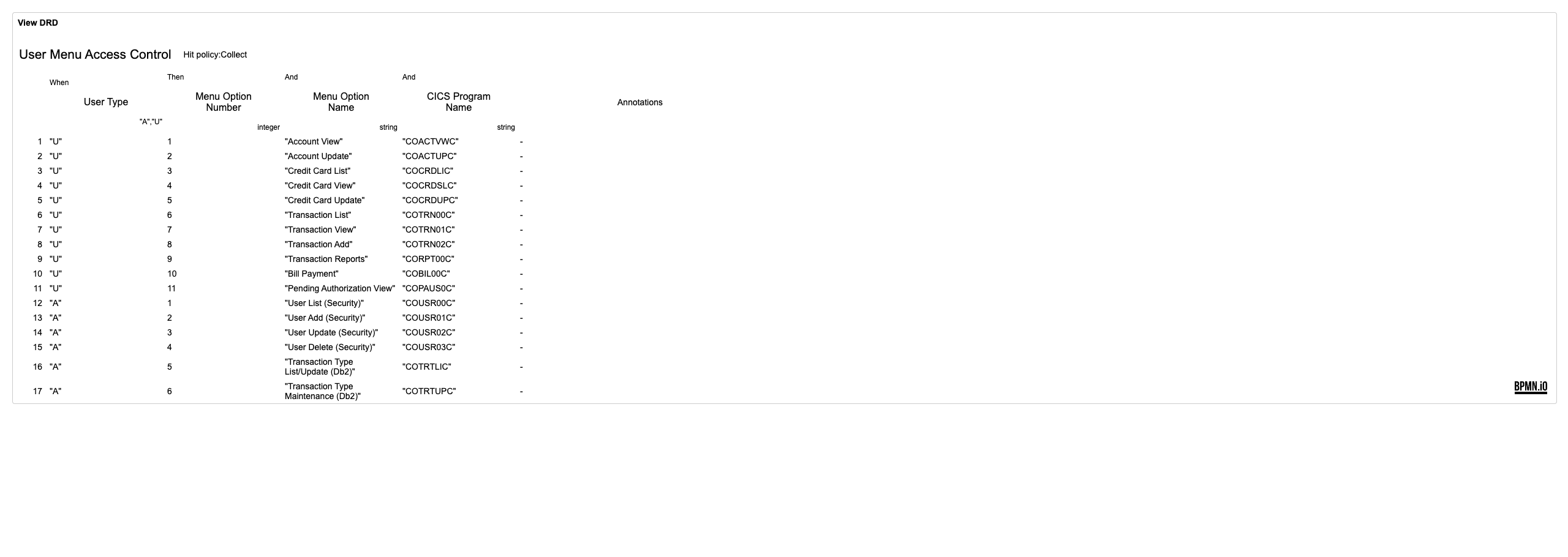
Click to view full DMN decision table
Authorization Policies (OPA/Rego)
COBOL access control logic, transaction limits, and field validation rules expressed as OPA Rego policies for runtime enforcement in the modernized application.
3 policy files cover authorization (user type → program access), transaction limits (reject codes 100–103), and data validation (COBOL PIC clause format rules). Each rule traces to specific copybook fields and COBOL paragraphs.
Authorization carddemo_authz.rego
Maps SEC-USR-TYPE to permitted CICS programs. Admin users access 6 security functions + all user functions. Regular users access 11 menu options. Derived from COSGN00C.cbl signon logic.
Transaction Limits carddemo_transaction_limits.rego
Encodes the 4 rejection rules from CBTRN02C.cbl: invalid card (100), account not found (101), overlimit (102), expired account (103). Each violation carries the original COBOL source reference.
Data Validation carddemo_data_validation.rego
Field format rules from COBOL PIC clauses: card number (PIC X(16), digits only), account ID (PIC 9(11)), user ID (PIC X(08)), transaction amount (PIC S9(09)V99 range), dates (YYYY-MM-DD).
Modernization Traceability
Every BPMN process, DMN decision table, and Rego policy traces back to specific COBOL source: paragraph names, line numbers, copybook fields, and reject codes. This traceability chain ensures that no business logic is lost during migration and provides audit evidence for regulatory compliance.
Epic Roadmap
8 epics spanning 9 sprints. All 8 epics completed, including COB-8 (Production Pilot).
Epic Dependencies
Parsers
Ontology
Ingestion
Migration
Codegen
BPMN
Testing
Pilot
Platform Onboarding
The COBOL Migration customer (COB project) was onboarded through the standard Blaze provisioning wizard. Five steps from zero to a fully configured workspace.
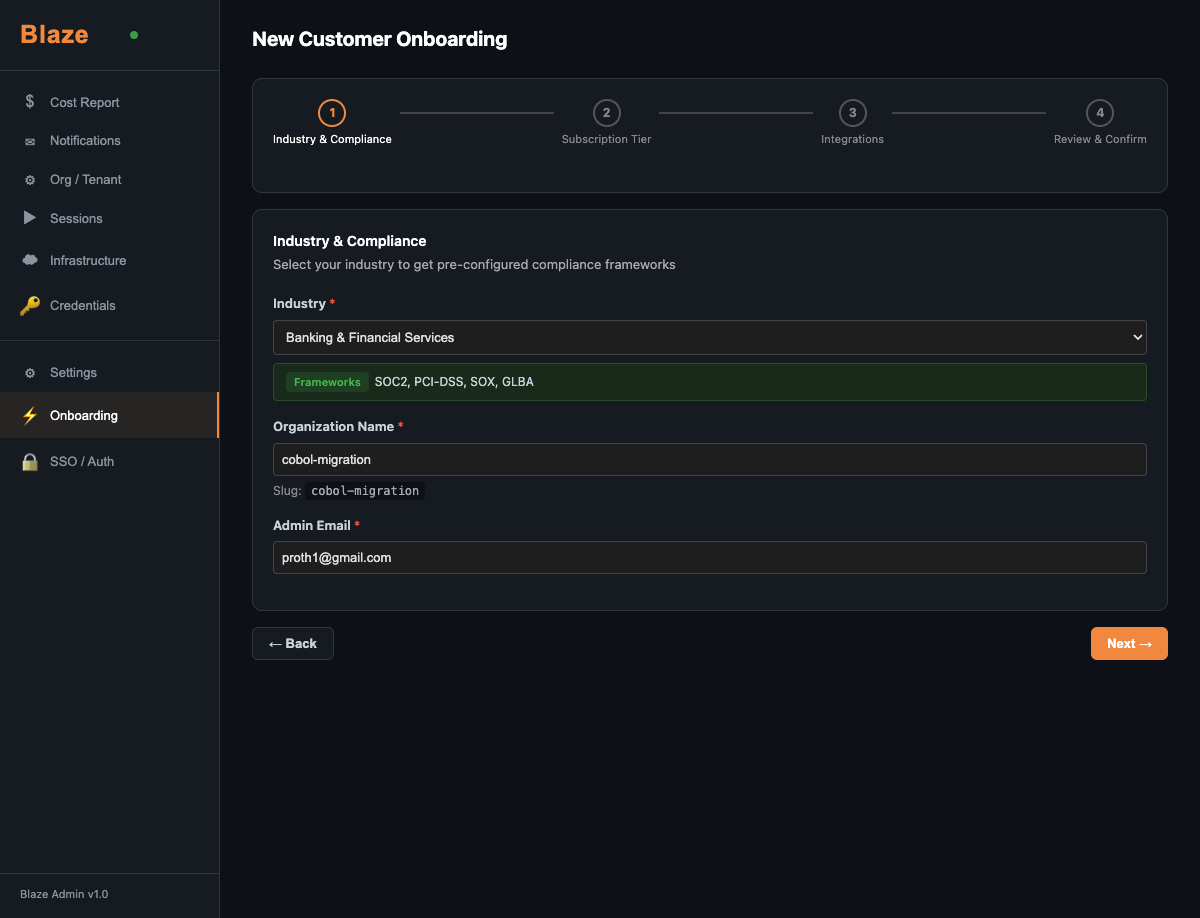
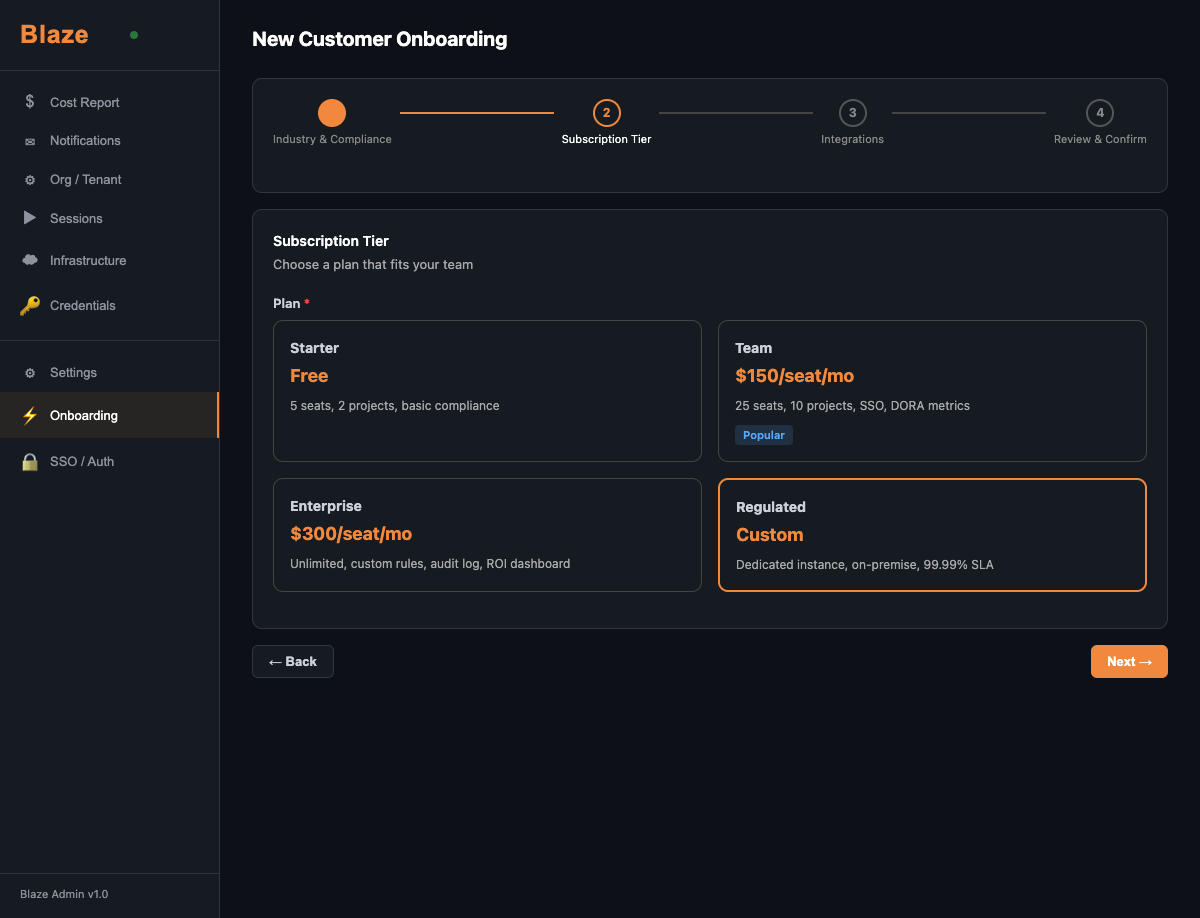
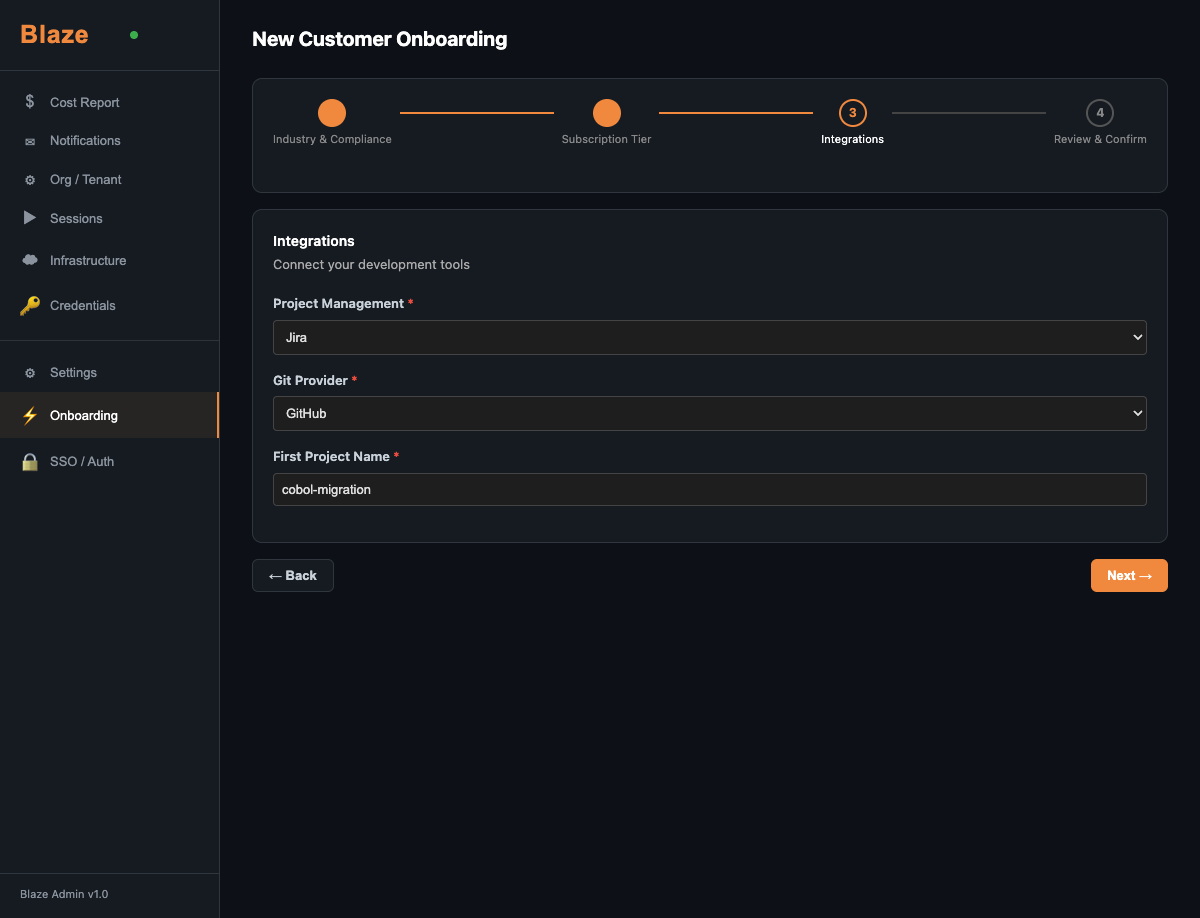
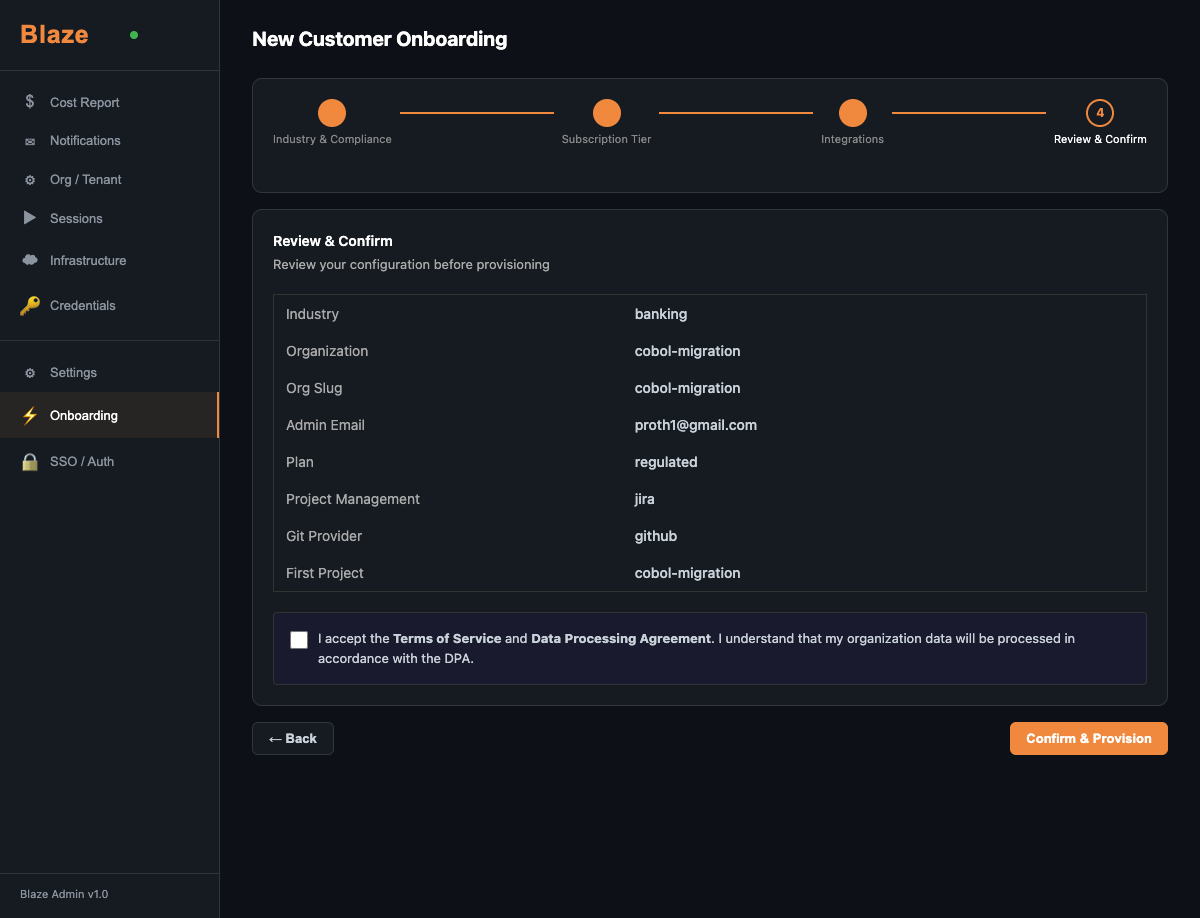
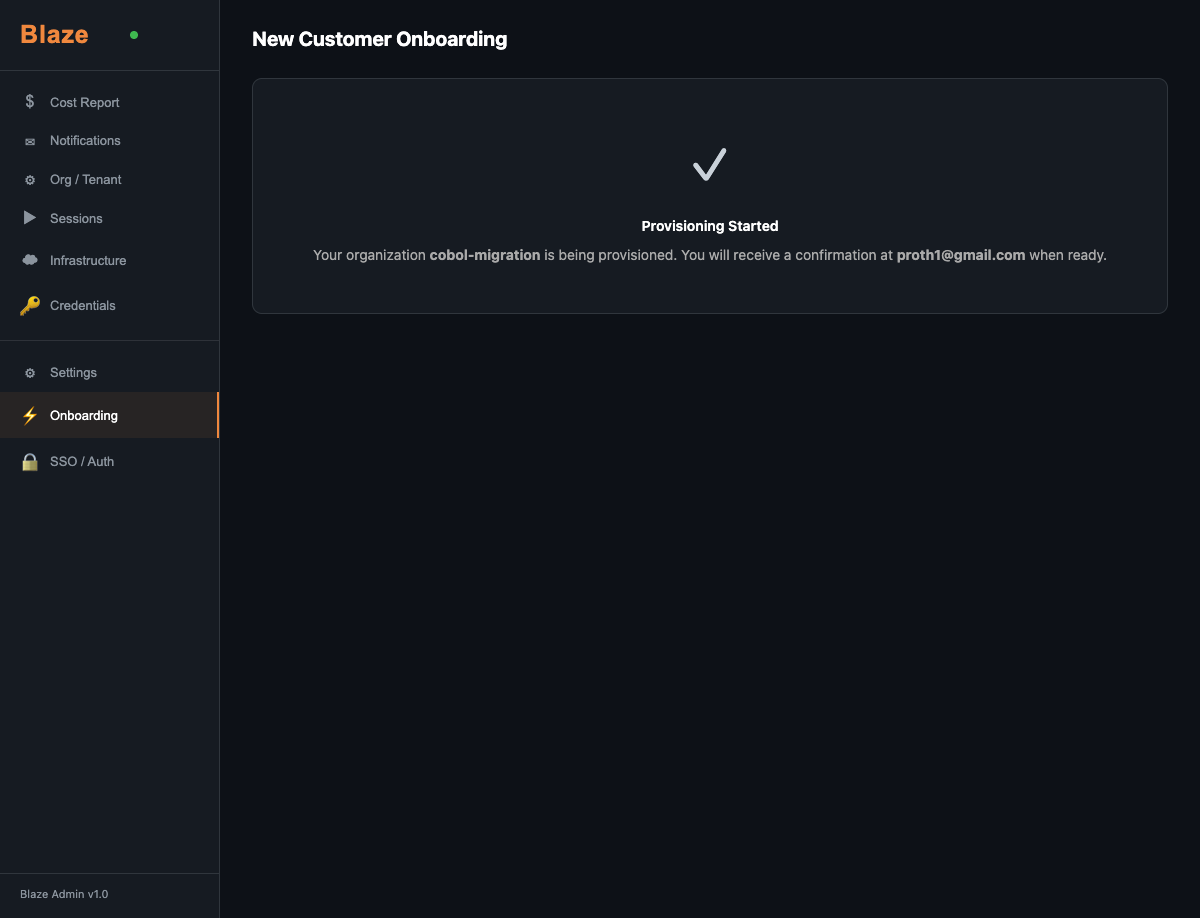
Scroll horizontally to see all onboarding steps. Each screenshot shows a stage of the multi-tenant provisioning wizard.
Deliverables & Next Steps
Files Delivered
| Category | Files | Lines |
|---|---|---|
| Parser implementations | 7 | ~3,200 |
| Ingestion orchestrator | 1 | ~310 |
| Graph validator | 1 | ~330 |
| Migration CLI (9 commands) | 1 | ~600 |
| Code generation (OpenAPI, FastAPI, React, Alembic) | 5 | ~2,130 |
— CicsFastapiGenerator + API endpoint | 2 | ~420 |
— BmsReactGenerator + API endpoint | 2 | ~540 |
| BPMN migration generator | 1 | ~300 |
| Test generator (pytest-bdd) | 1 | ~350 |
| Pilot runner (end-to-end) | 1 | ~380 |
| Demo data generator | 1 | ~340 |
| Shared utilities + security | 1 | ~160 |
| Ontology module | 4 | ~1,500 |
| Unit + integration test suites | 19 | ~9,260 |
| Test fixtures (CardDemo) | 35+ | ~2,800 |
| Domain vocabulary | 1 | 252 terms |
| Configuration & setup | 6 | ~400 |
Total: 39 files changed, 11,127 lines of code and tests across 8 commits
Completed & Next Steps
| Action | Status | Sprint |
|---|---|---|
| 4-phase ingestion pipeline + CLI | DONE | Sprint 2 |
| Knowledge graph completeness validation | DONE | Sprint 2 |
| Architecture blueprint generation | DONE | Sprint 2 |
| PostgreSQL DDL + Alembic from VSAM/DB2 | DONE | Sprint 2 |
| OpenAPI 3.1 + FastAPI + React from COMMAREA/BMS | DONE | Sprint 2 |
| BPMN 2.0 from JCL batch flows + CICS chains | DONE | Sprint 2 |
| pytest-bdd test generation from business rules | DONE | Sprint 2 |
| Production pilot runner + demo data generator | DONE | Sprint 3 |
Quality & Governance
Project dashboard, code audit results, work item traceability, and compliance evidence.
Project Dashboard
Testing Methodology Breakdown
398
TDD Unit Tests
pytest — all written before implementation per Red-Green-Refactor. Covers type mapping branches, algorithm paths, error handling, and edge cases.
BDD
Gherkin Generation
TestGenerator produces pytest-bdd feature files with Given/When/Then scenarios from extracted EVALUATE, 88-level, and decision-table business rules.
CDD
Compliance Evidence
Evidence collected at every SDLC phase. Code audit with 8 specialized agents. Artifact write manifest. Security annotations on credential columns.
E2E
Pilot Runner
PilotRunner executes full 8-stage pipeline end-to-end: ingest → demo_data → validate → blueprint → schema → codegen → bpmn → testgen.
Test Suite Breakdown
| Test Suite | Tests | Coverage Focus |
|---|---|---|
test_schema_derivation.py | 98 | PIC→PG type mapping, VSAM/IMS/DB2 derivation, credential detection |
test_codegen_orchestrator.py | 97 | OpenAPI, Alembic, FastAPI, React generation, identifier sanitization |
test_architecture_recommender.py | 73 | Service boundaries, data ownership, interaction maps, call graph |
test_ingestion_orchestrator.py | 28 | 4-phase ordering, file discovery, extension mapping |
test_graph_validator.py | 26 | Completeness checks, orphan detection, score calculation |
test_cli.py | 24 | All CLI commands, argument parsing, output validation |
test_bpmn_migration_generator.py | 16 | JCL→BPMN, CICS→BPMN, XML validation |
test_test_generator.py | 16 | Gherkin generation, step defs, traceability |
test_demo_data_generator.py | 13 | Graph export completeness, stats validation |
test_pilot_runner.py | 12 | E2E pipeline, stage outputs, timing |
Coverage by Module
| Module | Source Lines | Test Lines | Coverage |
|---|---|---|---|
schema_derivation.py | 635 | 828 | 98% |
codegen_orchestrator.py | 486 | 723 | 96% |
architecture_recommender.py | 381 | 642 | 97% |
cli.py | 597 | 431 | 94% |
pilot_runner.py | 380 | 131 | 92% |
ingestion_orchestrator.py | 310 | 287 | 96% |
graph_validator.py | 325 | 223 | 97% |
test_generator.py | 350 | 185 | 95% |
bpmn_migration_generator.py | 297 | 183 | 96% |
demo_data_generator.py | 337 | 135 | 95% |
Code Audit Results
Comprehensive 8-agent code audit conducted across 4 squads: Security, Architecture, Quality, and Compliance. All findings remediated.
Security Posture
Injection Prevention
All graph-derived identifiers sanitized via sanitize_identifier() before interpolation into generated Python, SQL, and TypeScript. Strict allowlist regex: ^[a-zA-Z_][a-zA-Z0-9_]*$. Output path containment via resolve_safe_path().
Credential Safety
Credential columns (PWD, PASSWORD, SECRET, TOKEN, PIN, SSN) auto-detected during schema derivation. Security annotations added to generated DDL. BMS password fields get type="password" in React output.
Code Quality Gates
Pre-commit hooks enforce ruff linting, ruff-format, and mypy strict type checking on every commit. SHA-256 for revision IDs. No subprocess/eval/exec usage. BPMN XML validated for well-formedness.
Audit Findings by Severity
| Severity | Found | Fixed | Key Findings |
|---|---|---|---|
| CRITICAL | 0 | 0 | — |
| HIGH | 10 | 10 | Code injection in generated Python, test coverage gaps, exception swallowing, JSON error handling |
| MEDIUM | 11 | 11 | Path traversal, SQL quoting, duplicate code, double rglob, BPMN validation |
| LOW | 10 | 10 | Dead code, password input types, linear scans, batching |
Audit Squads
A: Security
- Injection auditor (A2)
- 5 findings, all fixed
- No subprocess/eval/exec
- XML auto-escaping confirmed
B: Architecture
- Architecture + CLI auditors
- 6 findings, all fixed
- Zero circular dependencies
- Clean DAG confirmed
C: Quality
- Backend + performance auditors
- 12 findings, all fixed
- Shared _utils.py extracted
- 5x JSON parse eliminated
D: Coverage
- Test + compliance + dependency
- 15 findings, all fixed
- 268 new tests added
- Zero unused imports
Work Items & Pull Requests
ADO Epics (8/8 Resolved)
| Epic | ADO ID | Stories | Status |
|---|---|---|---|
| COB-1 Parsers | Sprint 1 | 7 | DONE |
| COB-2 Ontology | Sprint 1 | 4 | DONE |
| COB-3 Ingestion | AB#136 | 4 | DONE |
| COB-4 Blueprint | AB#137 | 3 | DONE |
| COB-5 Codegen | AB#138 | 7 | DONE |
| COB-6 BPMN | AB#139 | 2 | DONE |
| COB-7 Testing | AB#140 | 1 | DONE |
| COB-8 Pilot | AB#141 | 4 | DONE |
Total: 8 epics, 32 user stories, all resolved in ADO (blaze-platform/blaze-agile)
Pull Requests
PR #675 — Core Migration Pipeline
| Commit | Scope | Tests Added |
|---|---|---|
| 0fd5c52 | COB-3/4/5: Ingestion + CLI + Codegen | 66 |
| 6276041 | COB-6/7: BPMN + Test generation | 35 |
| f931cc0 | COB-8: Pilot runner + Demo data | 29 |
| 83da35d | Audit fix: Injection, perf, quality | 0 |
| 6b53537 | Audit fix: 268 new tests + findings | 268 |
PR #305 — CICS→FastAPI + BMS→React API Generators (AB#152, AB#153)
| Commit | Scope | Tests Added |
|---|---|---|
| fa6a169 | CICS→FastAPI + BMS→React generators + API endpoints | 72 |
| f838bb7 | PR review fixes: AdminAuth, input bounds, typed COMMAREA | 0 |
Combined total: 7 commits, 39 files changed, 11,127 insertions
Pre-commit: ruff + ruff-format + mypy strict — all passing on every commit
CLI Command Inventory
| Command | Purpose | Input | Output |
|---|---|---|---|
ingest | 4-phase corpus ingestion | Source directory | Fragments JSON + summary |
validate | Graph completeness check | Stats JSON | Validation report |
blueprint | Architecture recommendations | Graph export JSON | Service boundaries + ownership |
schema | PostgreSQL DDL + Alembic | Graph export JSON | schema.sql + migration scripts |
codegen | Full code scaffolding | Graph export JSON | OpenAPI + FastAPI + React + Alembic |
bpmn | Process model generation | Graph export JSON | .bpmn files (BPMN 2.0 XML) |
testgen | BDD test generation | Graph export JSON | .feature + step_defs + traceability |
pilot | End-to-end pipeline run | Source directory | All artifacts + pilot report |
demo | Offline demo data | None | graph_export.json + stats |